
Tải xuống các tệp APK/XAPK miễn phí từ cửa hàng Google Play mà không cần phải đăng nhập vào tài khoản.
Bây giờ cài đặt
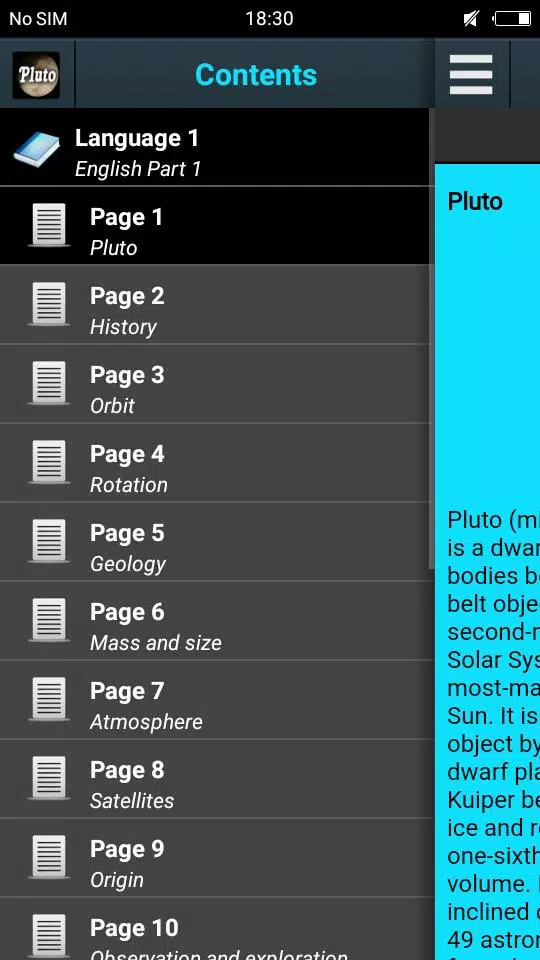
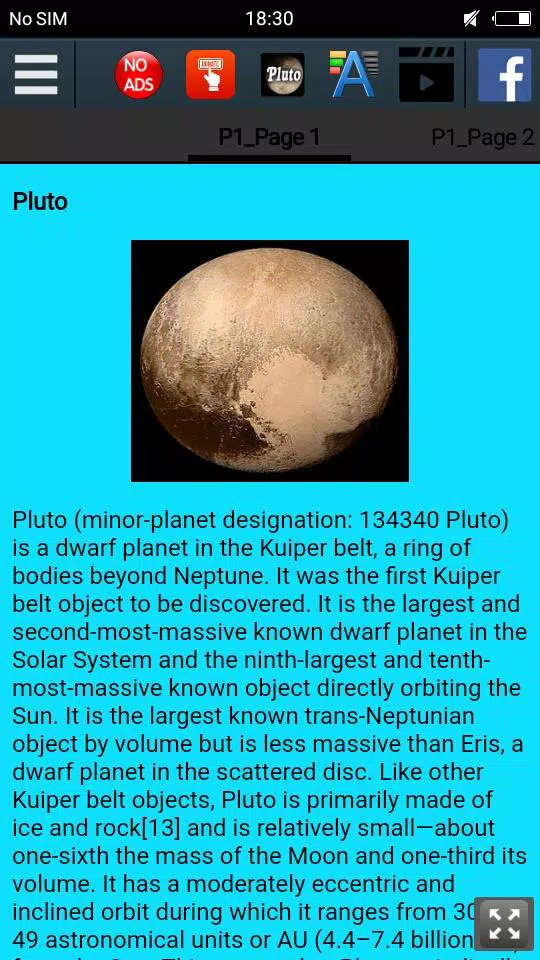
Pluto is a dwarf planet in the Kuiper belt, a ring of bodies beyond Neptune. It was the first Kuiper belt object to be discovered. It is the largest and second-most-massive known dwarf planet in the Solar System and the ninth-largest and tenth-most-massive known object directly orbiting the Sun. It is the largest known trans-Neptunian object by volume but is less massive than Eris, a dwarf planet in the scattered disc. Like other Kuiper belt objects, Pluto is primarily made of ice and rock[13] and is relatively small—about one-sixth the mass of the Moon and one-third its volume. It has a moderately eccentric and inclined orbit during which it ranges from 30 to 49 astronomical units or AU (4.4–7.4 billion km) from the Sun. This means that Pluto periodically comes closer to the Sun than Neptune, but a stable orbital resonance with Neptune prevents them from colliding. Light from the Sun takes about 5.5 hours to reach Pluto at its average distance (39.5 AU).
Pluto was discovered by Clyde Tombaugh in 1930, and was originally considered the ninth planet from the Sun. After 1992, its planethood was questioned following the discovery of several objects of similar size in the Kuiper belt. In 2005, Eris, which is 27% more massive than Pluto, was discovered, which led the International Astronomical Union (IAU) to define the term "planet" formally for the first time the following year.[14] This definition excluded Pluto and reclassified it as a member of the new "dwarf planet" category.[15]
Phiên bản mới nhất
1.2Được tải lên bởi
صديق ودعشه
Yêu cầu Android
Android 4.1+
Xếp hạng nội dung
Everyone
Báo cáo
Gắn cờ là không phù hợpLast updated on Aug 18, 2021
Phiên bản này bao gồm các bản sửa lỗi nhỏ và cải tiến chung. Hãy cập nhật lên phiên bản mới nhất để có trải nghiệm tốt nhất.



APKPure - Kho ứng dụng đa nền tảng chủ yếu tập trung vào Android, cung cấp nội dung phong phú về ứng dụng. Khám phá ứng dụng bạn muốn dễ dàng, nhanh chóng và an toàn hơn, với tính năng tải xuống và cài đặt nhanh chóng và hiệu quả.